Culture
Human + AI: The Future of Work is Collaboration – Webinar Highlights
LantroTech Marketing
September 25, 2026
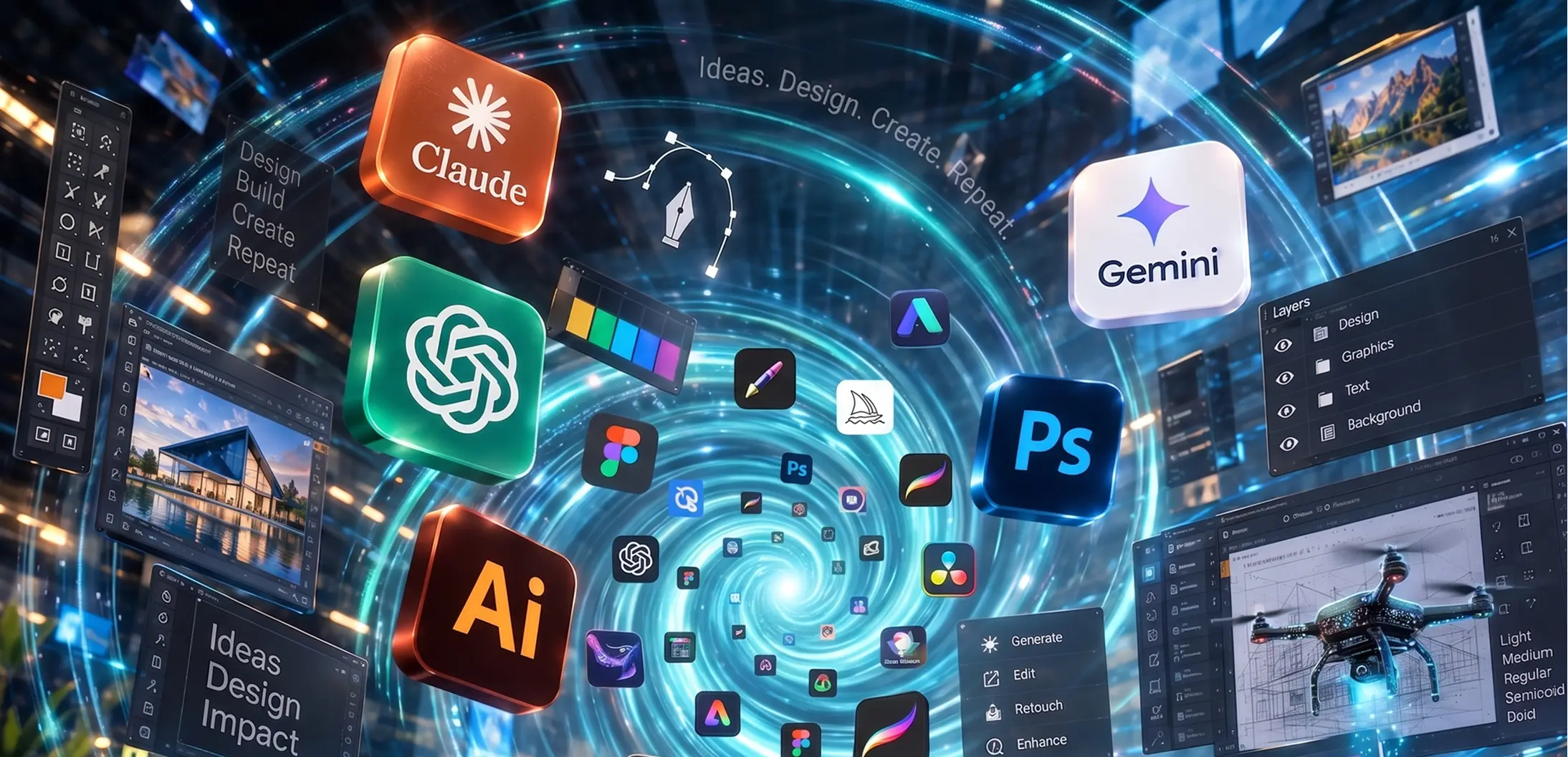
What Happens When Human Creativity Meets Artificial Intelligence?
As AI continues to reshape industries, the conversation around the future of work is becoming more complex. Will AI replace jobs, create new opportunities, or fundamentally change how we work? And as technology becomes more capable, what remains uniquely human?
These questions took center stage during LantroTech’s webinar, “Human + AI: The Future of Work is Collaboration.”
Bringing together experts from the creative, technology, and AI industries, the panel explored how AI is transforming professional workflows, the unique value humans bring to the table, and how individuals can prepare for the future of work.
The discussion went beyond the familiar question of whether AI will replace humans. Instead, it examined how people can use AI effectively while preserving the judgment, creativity, and context that make their work meaningful.
Let’s explore the key takeaways from the conversation.
How AI Is Changing the Way We Work
The conversation began with a question that is becoming increasingly relevant across industries:
Will AI create more jobs than it replaces?
As artificial intelligence continues to evolve, its impact on the workplace extends beyond automation. From writing and designing to coding, analyzing, and managing workflows, AI is changing how professionals approach their daily responsibilities.
The panel explored this transformation through different industry perspectives, examining how AI is already influencing work and what these changes could mean for the future.
Rather than treating AI as a simple replacement for human effort, the discussion encouraged participants to consider how technology can support better decision-making, improve productivity, and create new ways of working.
What Is Actually Changing?
Jibran T. Siddiqui, Creative Director at Iris Digital, shared a direct perspective on AI’s impact on employment and creative work:
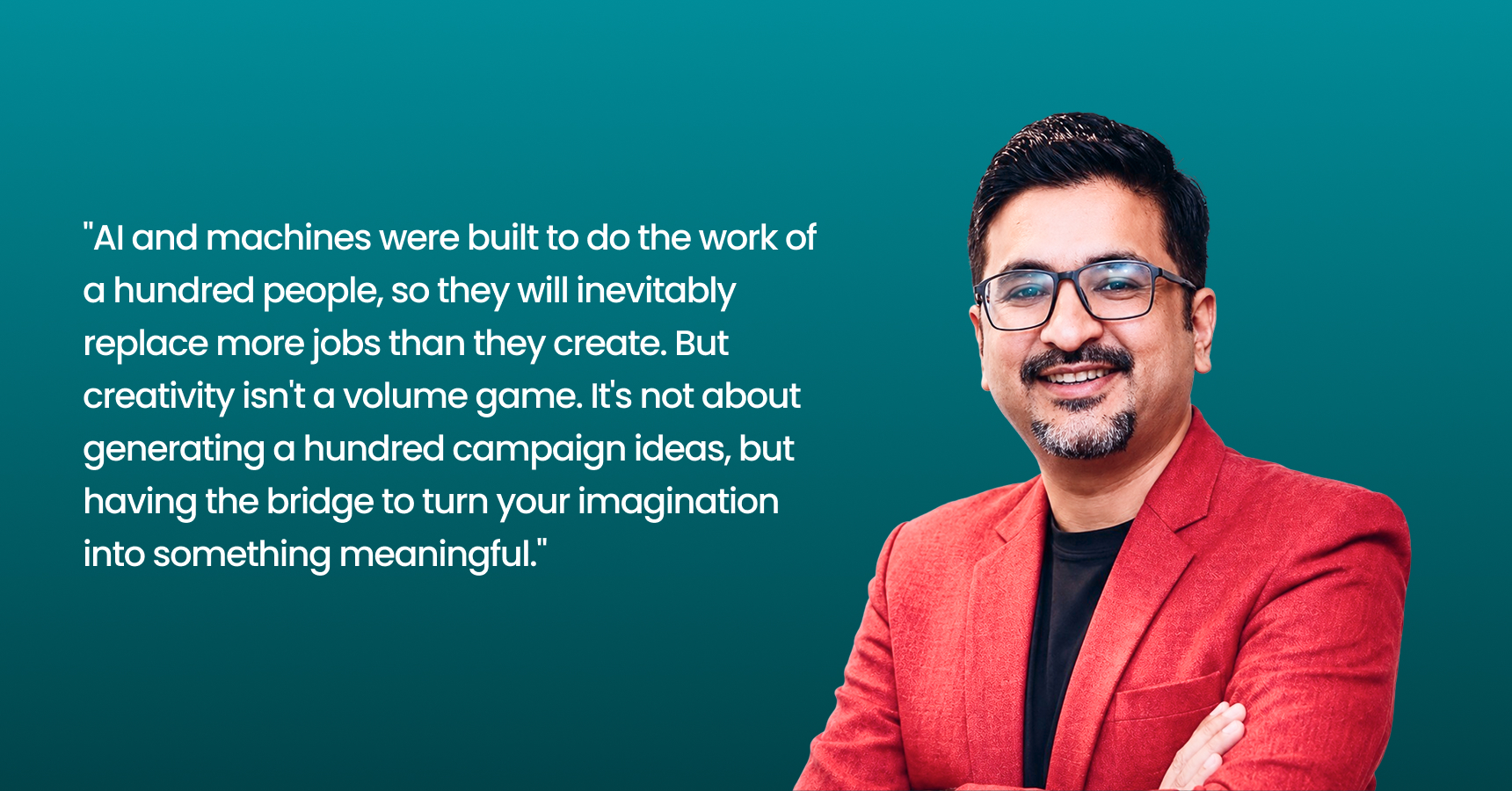
For creative professionals, AI can help transform abstract ideas into visual references, support mood boarding, and accelerate storytelling and presentation development. However, the ability to shape those ideas into something memorable and relevant requires more than volume.
The discussion also explored how AI is changing technical workflows.
Abdullah Sohail, Senior Product Manager at Rayn, explained how AI has shifted his approach to software development:
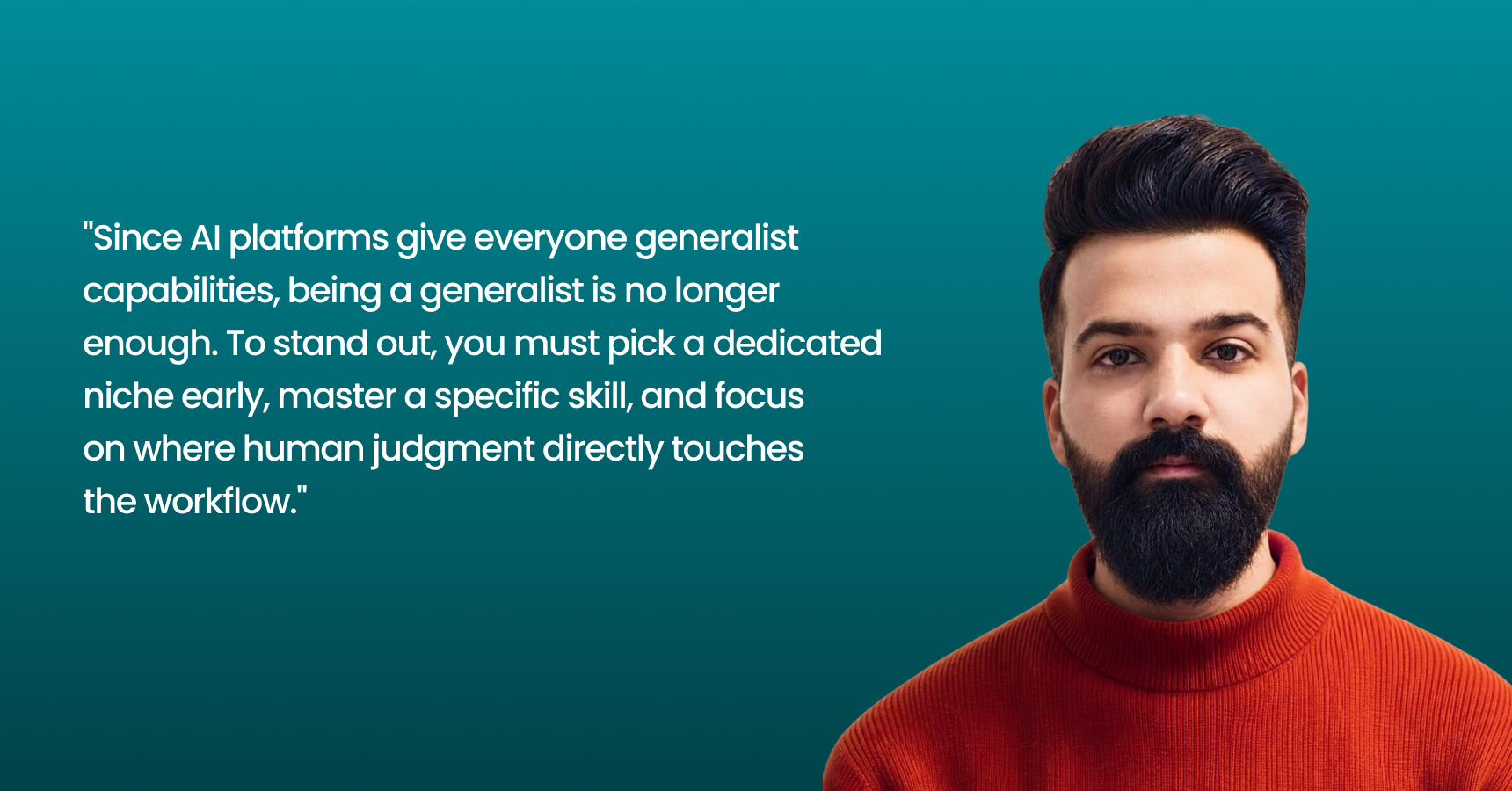
Instead of spending extended periods interpreting documentation, teams can move toward working prototypes and more practical discussions around implementation.
The broader takeaway: AI is changing both the tasks people perform and the way teams approach problem-solving.
What Humans Bring to the Table
As AI becomes more capable of generating content, analyzing information, and producing creative outputs, the discussion moved toward a more fundamental question:
What can technology replicate, and what remains distinctly human?
The panel explored the role of creativity, empathy, cultural understanding, and judgment in professional work.
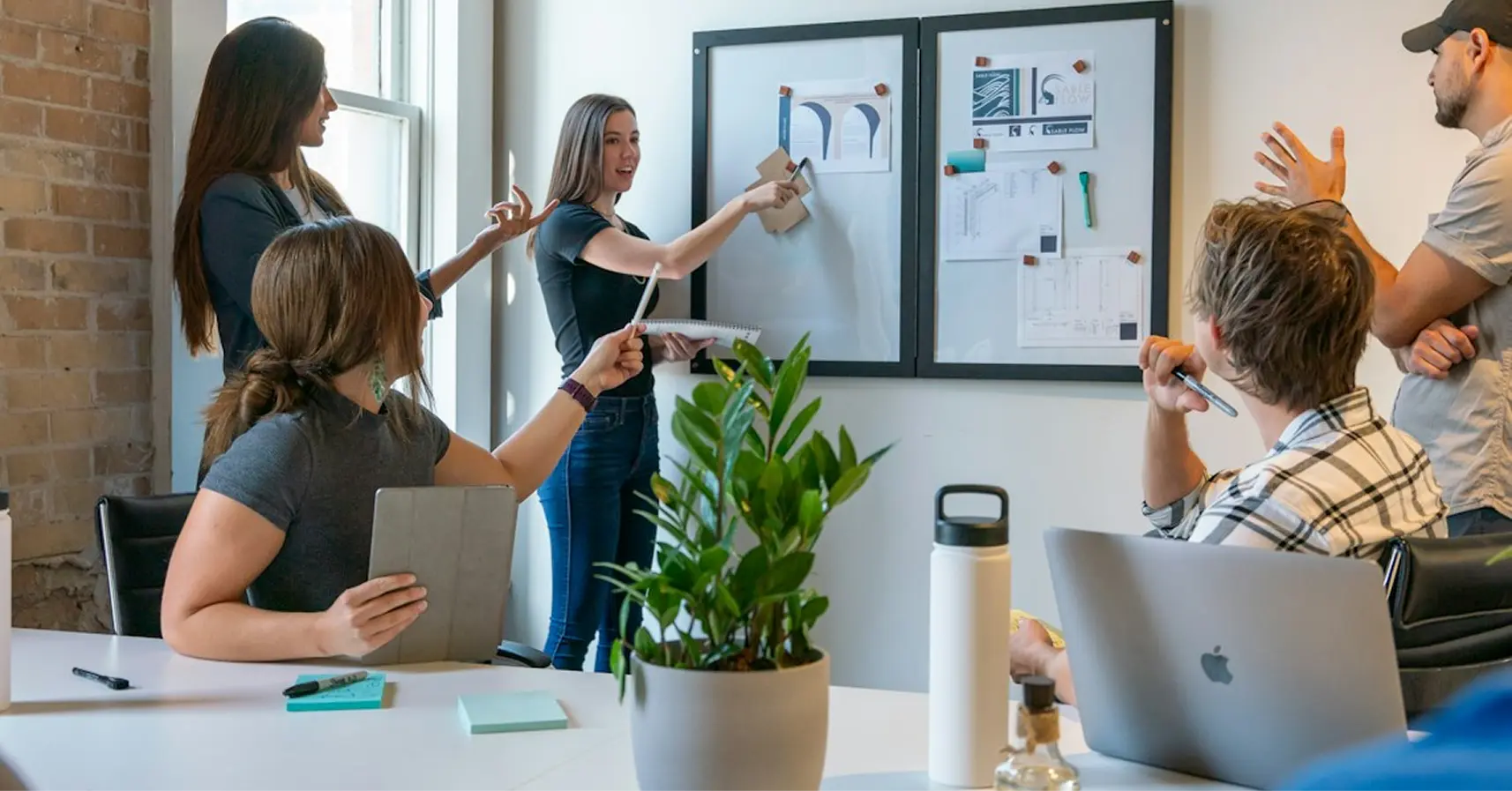
Creativity Is More Than Generating Ideas
Jibran highlighted an important distinction between generating ideas and exercising creative judgment.
AI can produce numerous concepts in a short period of time, but the ability to identify an idea that is memorable, relevant, and aligned with a campaign’s objective requires direction.
A creative professional must consider the message, the audience, and the intended impact of the work.
Generating 100 options is not the same as knowing which option deserves to be developed.
This distinction became particularly relevant when discussing the future of design and creative industries. As AI makes production faster, the ability to evaluate and refine ideas becomes increasingly important.
Why Context and Cultural Understanding Matter
Fizza Amjad, CEO & Co-Founder of Atom Camp, discussed the importance of human expertise in an AI-driven economy:
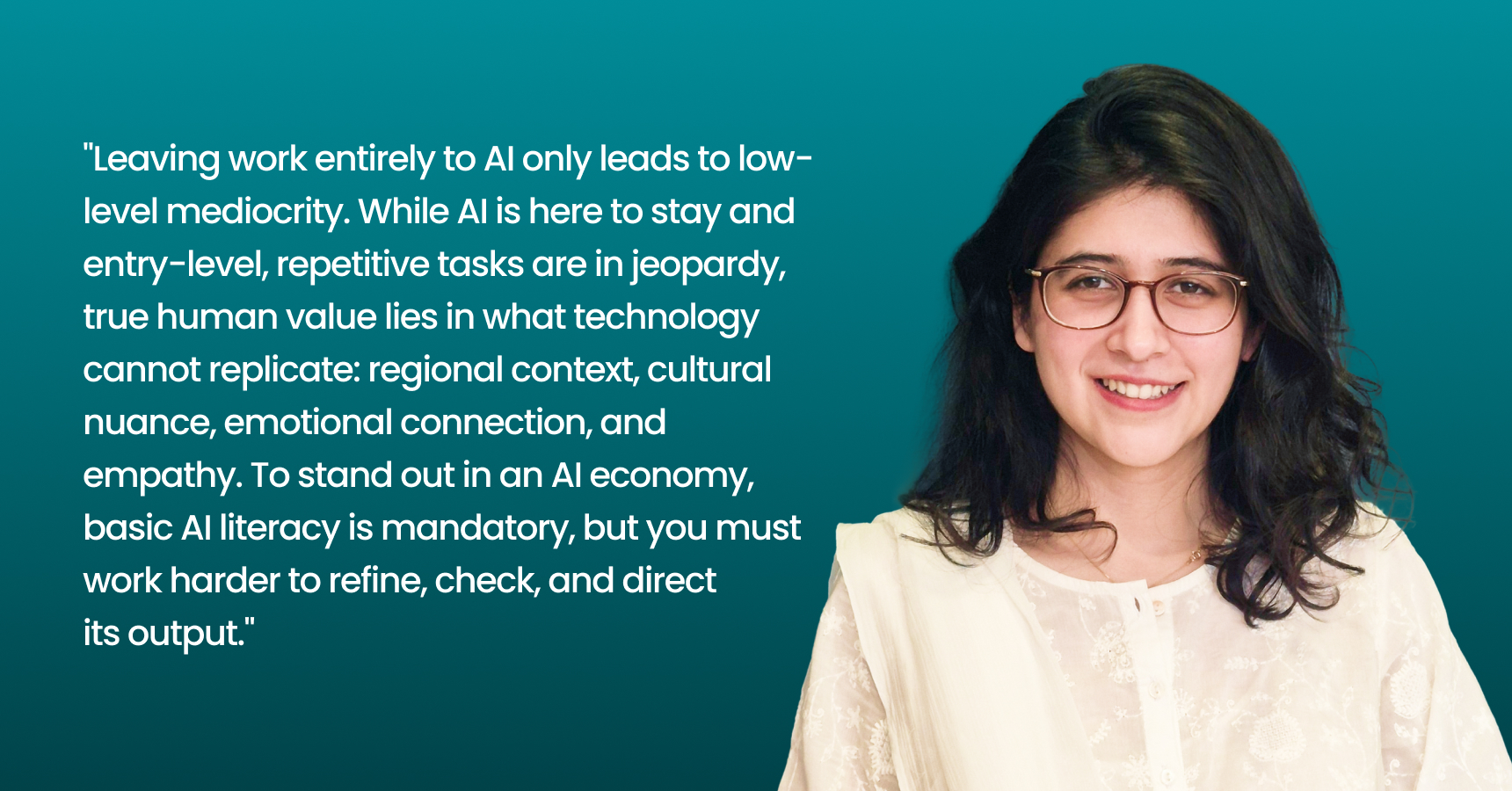
Her perspective highlights the importance of evaluating AI-generated work rather than accepting it without review.
AI models learn from existing data, which can contain cultural biases and gaps in representation. This can affect how effectively an output reflects the expectations of a particular audience.
For professionals working in markets such as Pakistan and Saudi Arabia, understanding local culture, communication styles, and audience expectations remains essential.
An output may be technically polished while still missing the emotional or cultural context needed to make it effective.
Fizza’s point also extends beyond creative work. As AI handles more repetitive tasks, professionals may need to develop stronger domain expertise and the ability to assess, refine, and direct AI-generated results.
Humans + AI: Can Collaboration Make Us Better?
The discussion then moved from what AI can do to how humans and AI can work together more effectively.
One of the key questions raised during the webinar was:
What Does An Ideal Human + AI Collaboration Look Like?
The panel explored how professionals can use AI to handle repetitive and labor-intensive tasks while retaining responsibility for critical thinking, direction, and decision-making.
AI as a Starting Point, Not the Final Answer
Hamza Mushtaq, Multimedia Designer at LantroTech, described his approach to integrating AI into creative workflows:
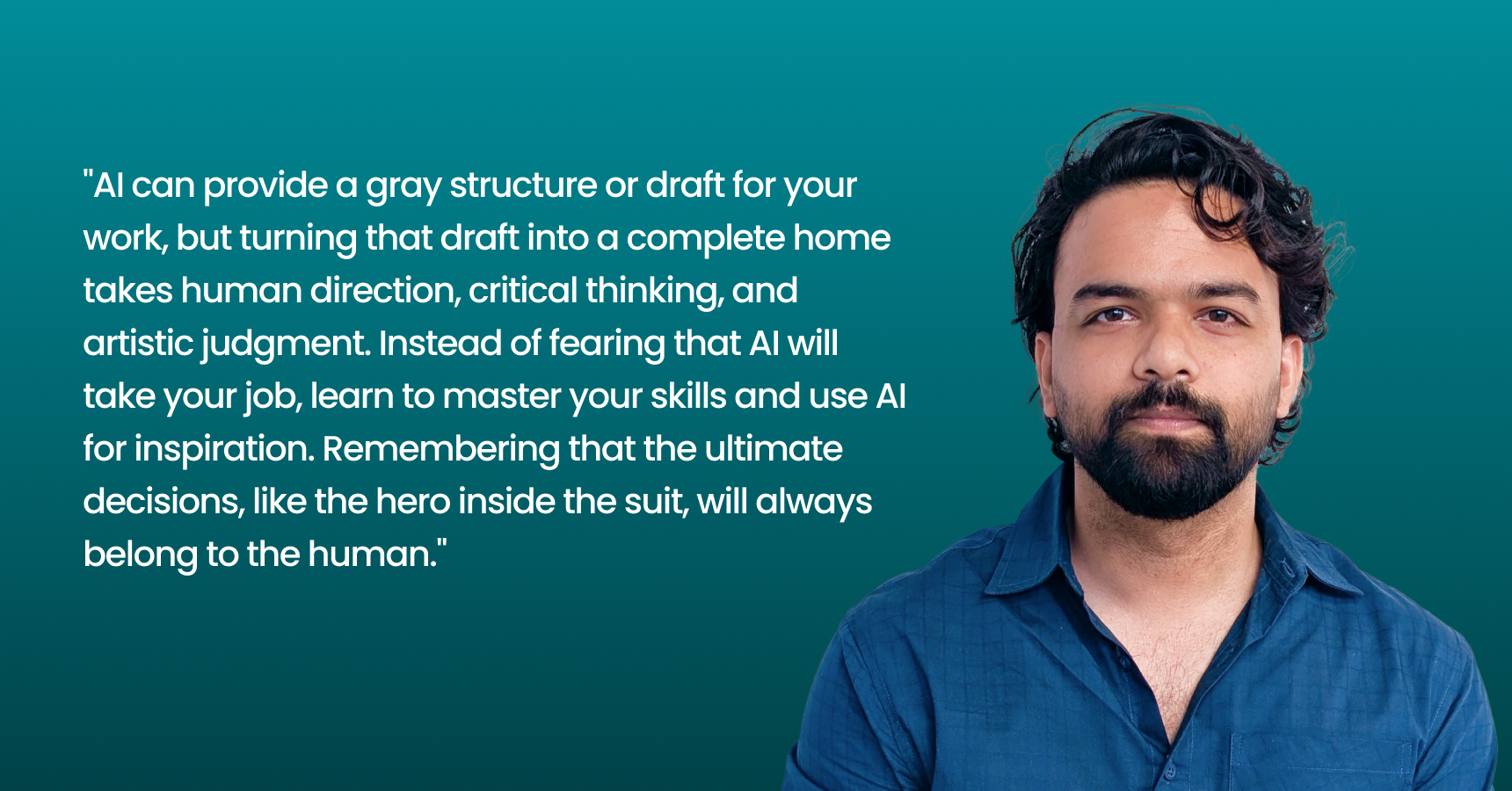
AI can assist with scriptwriting, storyboard development, and initial concepts, particularly when production resources or physical shoots are limited. However, turning an initial draft into a finished piece requires creative direction, refinement, and judgment.
For designers, the goal is not simply to generate an output but to understand how that output can be improved and adapted to meet the project’s objectives.
This also connects to a broader question explored during the webinar:
If AI can generate an idea, design, or campaign, can we automatically call it creativity?
The discussion highlighted that creative work involves more than the final output. It also includes the intention, decisions, context, and refinement behind it.
Productivity Versus Quality
As AI tools make certain tasks faster, professionals may also face increased expectations around output.
Hamza highlighted the importance of managing these expectations through effective communication with stakeholders.
Greater efficiency should not automatically mean sacrificing quality or treating every available minute as an opportunity to increase workload.
Instead, AI can be integrated into workflows in ways that support productivity while allowing professionals to maintain standards and focus on meaningful contributions.
What Becomes More Valuable About Being Human?
One of the webinar’s central questions asked:
If AI gets better, what becomes more valuable about being human?
The discussion pointed toward several capabilities that remain important across creative and technical work:

These capabilities are not necessarily separate from AI. In many cases, they determine how effectively AI-generated outputs can be used.
As technology continues to develop, the ability to work with AI while applying independent judgment may become increasingly important.
Preparing for the Future: What Skills Should Professionals Develop?
The panel also explored how students, creatives, and working professionals can prepare for changes in the workplace.
1. Specialize in a Field
Abdullah encouraged professionals and students to choose a niche and develop deeper expertise in a specific area.
As AI tools make general-purpose capabilities more accessible, specialized knowledge can help individuals develop skills that are more closely connected to specific industry needs.
The goal is not simply to know how to use a tool, but to understand the problems within a field and how to solve them effectively.
2. Develop AI Literacy
Fizza emphasized that professionals need to understand how AI works, where it can be useful, and how to evaluate its limitations.
AI literacy involves more than learning a collection of tools. It also includes staying informed, experimenting, reading, and developing the discipline to keep learning.
As AI capabilities change, professionals will need to adapt their knowledge and workflows accordingly.
3. Protect Your Core Creative Skills
For designers and other creatives, Hamza encouraged using AI for inspiration and support without abandoning the fundamental skills that shape their work.
AI can help with initial concepts and production, but creative direction, visual judgment, and refinement remain important parts of the process.
The challenge is to use AI to expand possibilities without becoming overly dependent on generated outputs.
The Future of Work: Opportunity, Threat, or Work in Progress?
During the webinar, participants were invited to share their perspectives through interactive voting questions.
One of the closing questions asked:
After today’s discussion, AI feels more like an opportunity, a threat, a teammate, or a work in progress?
This question captured the range of perspectives surrounding AI in the workplace.
The panel did not present a single experience or expectation for every industry. Instead, the discussion highlighted how AI’s impact depends on the nature of the work, the skills professionals develop, and the way organizations integrate technology into their processes.
The conversation also addressed concerns about dependency, changing employer expectations, and the risk of allowing AI to replace independent thinking.
The broader message was that adapting to AI requires both openness to new possibilities and an awareness of its limitations.
Key Takeaways from Our Panel
While each speaker approached the topic from a different professional background, several common themes emerged from the discussion.
AI Is Changing the Way Work Gets Done
From software prototyping to creative visualization, AI is helping professionals rethink existing workflows and reduce time spent on certain tasks.
Human Judgment Still Matters
Generating content or solutions is only one part of the process. Evaluating, refining, and applying outputs appropriately remain important responsibilities.
Specialization Can Help Professionals Stand Out
Developing deeper expertise in a specific field can help individuals contribute beyond general-purpose tasks that AI tools increasingly support.
AI Literacy Requires Continuous Learning
Professionals need to stay curious, understand emerging tools, and develop the ability to assess AI-generated outputs.
Collaboration Requires Intentionality
The value of human + AI collaboration depends on how the technology is integrated into workflows, not simply on whether it is available.
Watch the Full Webinar
Missed the live session or want to revisit the discussion?
Watch the full webinar to hear our panelists share their perspectives on AI, creativity, productivity, and the future of work.
Closing Reflections
The “Human + AI: The Future of Work is Collaboration” webinar explored a question that will continue to evolve alongside artificial intelligence: how can humans and technology work together in ways that create meaningful value?
From creative direction and cultural understanding to software development and career preparation, the discussion highlighted the different ways AI is reshaping professional responsibilities.
As AI continues to advance, the ability to collaborate effectively with it will depend on how thoughtfully individuals and organizations approach its use.
The future of work is not just about what AI can do. It is also about how humans choose to work with it.
A heartfelt thank you to our panelists, Jibran T. Siddiqui, Abdullah Sahil, Fizza Amjad, and Hamza Mushtaq, for sharing their expertise and perspectives, and to everyone who joined the conversation.
Stay connected with LantroTech for more webinars, insights, and conversations exploring technology, creativity, and the future of work.
Share it on


