Estimation & Design
Electrical Estimating 101: Essential Skills, Tools, and Best Practices for Accurate Bids
LantroTech Estimation and Design
March 13, 2026

In today’s competitive construction industry, electrical estimating plays a critical role in winning projects and maintaining long-term profitability. An accurate electrical estimate not only improves bid success but also lays the groundwork for smooth project execution, effective scheduling, and strong cost control.
Electrical estimating is a blend of technical expertise, analytical skills, industry knowledge, and modern estimating tools. This guide explores the essential skills, tools, and best practices every electrical estimator should master to deliver accurate, competitive, and professional bids.
What Is Electrical Estimating?
Electrical estimating is the systematic process of evaluating and calculating the total cost required to complete the electrical scope of a construction project. A comprehensive electrical estimate typically includes:
- Material costs (conduits, cables, fixtures, panels, devices)
- Labor hours and labor rates
- Equipment and tools
- Subcontractor costs
- Overhead, profit margins, and contingencies
Accurate electrical cost estimating ensures competitive pricing while minimizing financial risk and reducing the likelihood of cost overruns during project execution.
Essential Skills for Electrical Estimators

Successful electrical estimators rely on a combination of technical knowledge and professional skills to produce reliable bids.
Laying the Foundation
Our estimation process begins with a thorough review of floor plans, BOQs, and device layout drawings. We categorize the project scope into low-level items like cables and patch panels, and high-level items like switches, UPS units, and firewalls. All assumptions, exclusions, and dependencies are clarified upfront to prevent ambiguity and align expectations from day one.
1. Blueprint and Specification Reading
Understanding electrical drawings, single-line diagrams, schedules, and technical specifications is fundamental. Estimators must identify scope gaps, exclusions, coordination requirements, and code-related issues early in the bidding process.
2. Strong Analytical and Mathematical Skills
Electrical estimators must accurately quantify materials, calculate labor productivity, and analyze cost impacts. Strong analytical thinking helps identify risks, cost drivers, and value-engineering opportunities.
3. Attention to Detail
Attention to detail is critical in electrical estimating. Small oversights—such as missed devices, incorrect quantities, or inaccurate assumptions—can result in uncompetitive bids or costly overruns. Thorough reviews ensure accuracy and consistency.
4. Knowledge of Electrical Systems
A solid understanding of power distribution, lighting systems, fire alarm systems, and low-voltage systems, along with applicable electrical codes and standards, helps create realistic and constructible estimates.
5. Time Management and Organization
With multiple bids running simultaneously, electrical estimators must manage deadlines efficiently while maintaining documentation, accuracy, and consistency.
6. Communication and Coordination
Clear communication with vendors, general contractors, engineers, and internal teams ensures alignment on scope, pricing assumptions, and bid requirements.
The Electrical Estimating Process
Following a structured electrical estimating process improves accuracy, repeatability, and risk management.

1. Project Review: Review drawings, specifications, addenda, and bid instructions to understand project requirements.
2. Scope Definition: Clearly define inclusions, exclusions, alternates, and value-engineering options.
3. Material Takeoff: Quantify all materials, including conduits, cables, lighting fixtures, panels, raceways, and devices.
4. Labor Estimation: Assign labor units based on productivity rates, site conditions, project complexity, and installation methods.
5. Pricing and Costing: Apply current material pricing, labor rates, equipment costs, overhead, and profit margins.
6. Final Review and Risk Assessment: Double-check quantities, assumptions, and pricing to reduce risk before bid submission.
Essential Tools for Accurate Electrical Estimating
Modern technology has significantly improved the efficiency and accuracy of electrical estimating.
1. Electrical Estimating Software
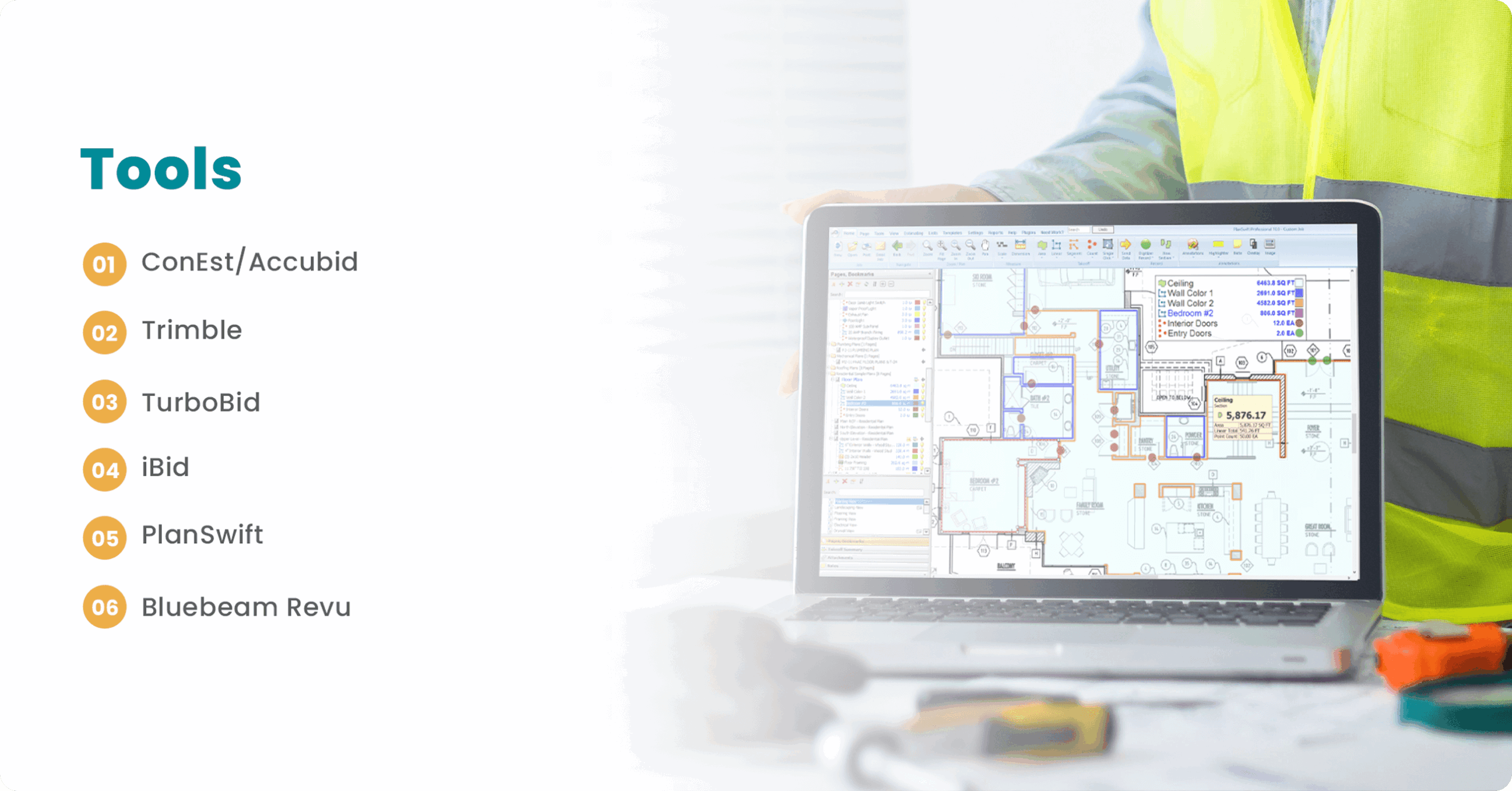
Professional estimating software automates takeoffs, pricing, and reporting. Commonly used tools include:
- ConEst / Accubid
- Trimble
- TurboBid
- iBid
These tools reduce manual errors, improve consistency, and accelerate bid preparation.
2. Digital Takeoff Tools
Digital takeoff software allows precise quantity measurements directly from electronic drawings. Popular tools include:
- PlanSwift
- Bluebeam Revu
These platforms enable accurate scaling, device counts, and conduit measurements.
3. Spreadsheets and Cost Databases
Many estimators use spreadsheets such as Excel for customized calculations, historical cost tracking, and labor productivity analysis.
4. Vendor and Supplier Pricing
Up-to-date vendor and supplier quotes ensure material pricing reflects current market conditions, availability, and lead times.
Best Practices for Accurate Electrical Bids
Following proven best practices leads to consistent and competitive electrical estimates:
- Thoroughly review drawings and specifications
- Maintain updated material pricing and labor databases
- Account for project complexity, phasing, and site conditions
- Include realistic contingencies to manage risk
- Conduct peer or senior estimator reviews
- Analyze historical project data to improve future estimates
Consistency and discipline in the estimating process result in improved accuracy and stronger bid performance.

Training and Professional Development for Electrical Estimators
Continuous learning is essential for staying competitive in the electrical estimating field. Professional development may include:
- Electrical estimating courses and certifications
- Software-specific training programs
- Industry seminars and workshops
- Staying current with electrical codes and standards
- On-the-job mentoring with senior estimators
Ongoing training enhances accuracy, confidence, and long-term career growth.
Towards Smarter Estimating
Electrical estimating is more than calculating numbers, iit is a strategic function that directly impacts project success, cost control, and long-term profitability. Accurate estimates support informed decision-making, reduce financial risk, and ensure smoother project execution from bidding through completion. By developing strong technical skills, following a structured estimating process, and leveraging modern estimating tools, electrical estimators can consistently deliver accurate, competitive, and reliable bids in today’s demanding construction environment.
At LantroTech, we provide comprehensive Electrical Estimation & Design (E&D) services tailored to meet the demands of modern construction projects. Our experienced team delivers accurate electrical estimates, detailed takeoffs, and value-driven design support to help contractors, developers, and project teams bid with confidence and execute with clarity. Step into the future of construction estimating with LantroTech. Connect with us and upgrade your projects today.
Share it on


